
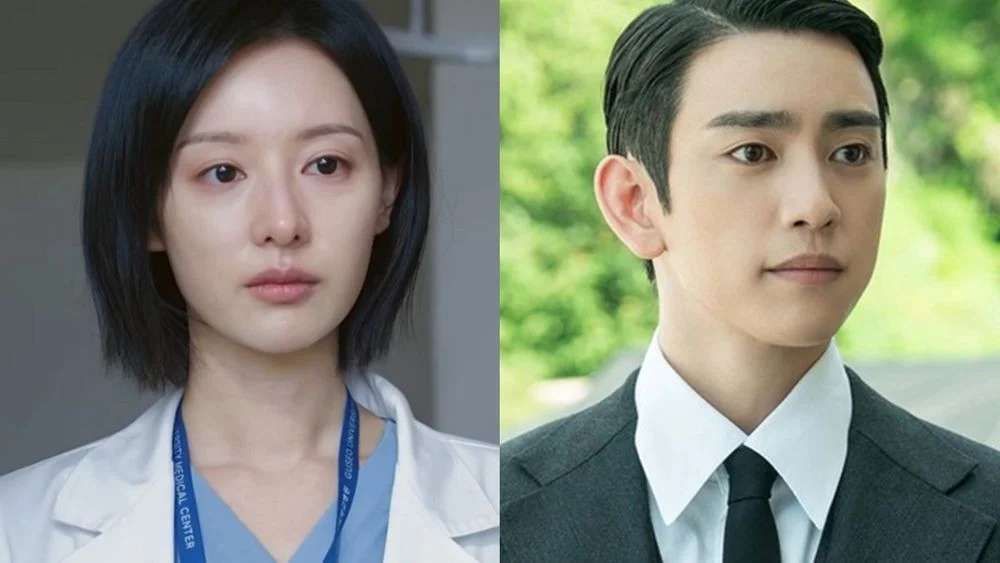
With two episodes left to air, tvN’s hit spy romance 100 Days of Lies is facing its sharpest backlash yet — not over ratings, which have never been higher, but over how it portrays a Korean man who lived as a Japanese colonial official. Some viewers say the drama is softening a pro-Japanese collaborator into a romantic hero. Others say the character is deliberately unresolved, and the finale will decide what the show really meant.
The debate centers on Kim Tae-woong, played by Park Jin-young. Tae-woong is Korean by birth but was raised as the adopted son of Sato Shinichi, a senior colonial official played by Jin Sun-kyu, and works as an interpreter for the Japanese Government-General in 1930s Gyeongseong. Opposite him, Kim Yoo-jung plays Lee Ga-kyung, a former pickpocket who becomes a spy for the independence movement. The two become entangled in a romance that has carried the series to the top of the buzz rankings.
Critics argue the show spends far more time on Tae-woong’s inner wounds and his love for Ga-kyung than on the privileges he enjoyed or any reckoning with his role in the colonial government. “Even by episode 12, there has been no real change,” one viewer wrote, while another said helping Ga-kyung “because he likes her is different from joining the independence movement.” The flashpoint came at the end of episode 12, when Tae-woong — who had protected Ga-kyung until then — suddenly pointed a pistol at her after a phone call with his adoptive sister was cut off by an explosion. For critics, the turn underlined that, with 12 of 16 episodes aired, Tae-woong had still not clearly chosen the independence cause.
Defenders push back on the “glorification” label. They argue Tae-woong was written as a deliberately contradictory figure — a man caught between the identity he was born with and the one he was raised into — and that depicting his conflict is not the same as endorsing it. With the finale still to air, they say, it is too early to judge a character whose final choice has not yet been shown. The show’s supporters also note that the debate itself is a sign of how closely viewers are watching.
The controversy has not dented the show’s momentum. Episode 12 averaged 10.4% nationwide, and episode 14 set a new series high of 11.7% as the leads discovered their shared mother. The series has topped the FUNdex TV and OTT drama buzz rankings for two straight weeks, and in the Korean Business Research Institute’s November rising-actor brand reputation rankings, released November 25, Kim Yoo-jung placed first and Park Jin-young second.
100 Days of Lies is the second hit drama of the season to face a reckoning over how it handles history. SBS’s Doctor X, which ended November 14 with a 15.2% finale rating after holding the No. 1 slot throughout its run, drew a National Assembly petition after its October 24 episode wove the May 18 Gwangju Democratization Movement into a medical case: a patient shot in Gwangju in 1980, living 46 years with a bullet fragment in his head. The petition, which passed the 100-consent threshold for review, demanded the broadcast be halted and the production process scrutinized. Criticism spilled onto lead actress Kim Ji-won’s personal social media, with some viewers calling for boycotts of products she advertises — a turn even the show’s defenders called out of bounds.
Both cases ask the same question: how much room does a popular drama have to use painful history as dramatic material? For 100 Days of Lies, the answer may arrive this weekend, when the final two episodes air on November 28 and 29. Viewers are watching to see whether Tae-woong finally picks a side — and whether the ending quiets the debate or deepens it.