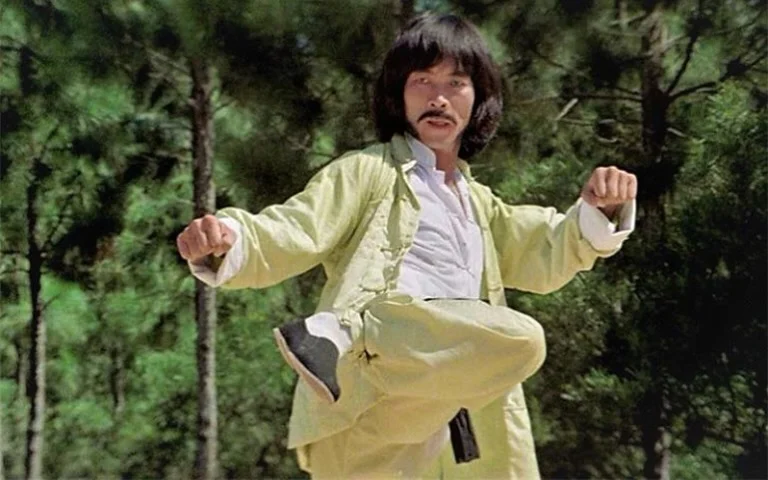
Hwang Jung-ri, the South Korean martial arts star best known to international audiences as Jackie Chan’s formidable rival in the 1978 classic “Drunken Master,” has died at the age of 81.
Ilgan Sports reported on November 13 that Hwang passed away on November 12 at Seoul St. Mary’s Hospital. The news was confirmed through a memorial post shared on the official social media account of the Hwang Jung-ri World Martial Arts Federation by its chairman, Kim Jin-yong.
“A great star of the world martial arts community, President Hwang Jung-ri, has passed away,” Kim wrote. “He left a distinct mark on the history of martial arts cinema in Korea and beyond.”
Kim praised the powerful kicks and intense performances Hwang showed in “Drunken Master,” “Snake in the Eagle’s Shadow,” and many other films, saying they “will remain forever in the memories of filmmakers and martial artists around the world.”
Born in 1944, Hwang worked as a taekwondo instructor before making his film debut in the 1974 movie “The Returned One-Legged Man.” He moved into the Hong Kong film industry and made his name with the 1976 film “South Fist North Kick,” quickly becoming one of the most recognizable villains of the era’s kung fu boom.
His defining year came in 1978, when he faced off against Jackie Chan in “Snake in the Eagle’s Shadow” and “Drunken Master.” In the latter, his role as Master Yim Cheol-sim put him toe to toe with Chan in some of the film’s most celebrated fight sequences. He later appeared in further Hong Kong martial arts films including “Game of Death,” and his kicking mastery earned him the nickname “King of Kicking” among martial arts fans overseas.
Hwang was more than a screen fighter. He starred in and directed the 1983 film “Gwangdong Salmusa,” later served as martial arts director and actor on the Korean dramas “Sandglass” and “The Returned Iljimae,” and in his later years served as president of the World Martial Arts Federation, promoting taekwondo and Korean martial arts around the world.
Kim’s tribute underlined that legacy, describing Hwang as “more than a film actor” and “a martial artist who devoted his life to promoting the excellence of Korean taekwondo to the world and to the exchange and development of Eastern and Western martial arts culture.”
Funeral arrangements were not included in the report.