
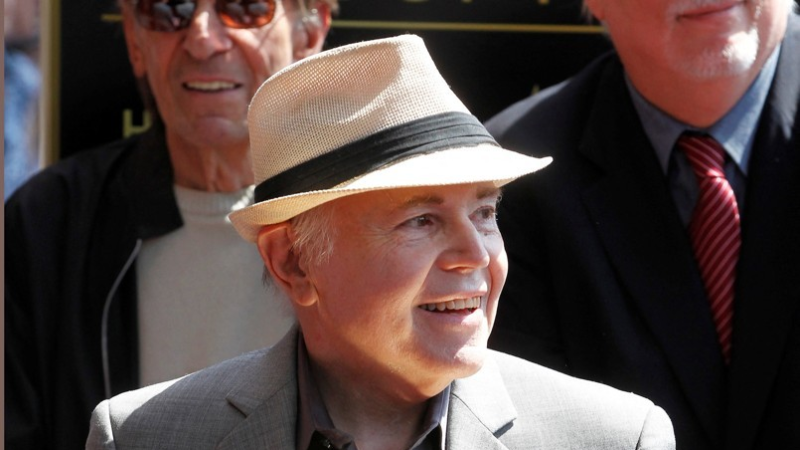
Walter Koenig, the actor who played the young Russian navigator Pavel Chekov in the original “Star Trek” series, has died at the age of 90. According to Yonhap News Agency, citing The New York Times and Variety, Koenig died of natural causes on October 25 (local time) at his home in Los Angeles, surrounded by his family.
Born in Chicago in 1936, Koenig did not set out to become an actor. He studied medicine at Grinnell College before transferring to the University of California, Los Angeles, where he earned a degree in psychology. It was at university that he discovered theater, began taking acting classes, and made his television debut in “Day in Court,” followed by appearances in “The Untouchables” and “Alfred Hitchcock Hour.”
Koenig joined “Star Trek” in its second season in 1967 as Chekov, a young Russian officer aboard the starship Enterprise. The character was added partly to appeal to younger viewers, while Captain Kirk and Mr. Spock were played by actors in their 30s. Chekov also carried a symbolic weight for the era: at the height of the Cold War, the series imagined a future in which a Russian and an American could serve side by side on the same crew.
After the original series ended in 1969, Koenig continued to appear on television, and he returned as Chekov when “Star Trek” moved to the big screen in the 1980s, playing a key role in “Star Trek II: The Wrath of Khan.” He later played the villain Alfred Bester in the hit series “Babylon 5.”
Beyond acting, Koenig worked as a screenwriter. He began writing scripts while facing financial difficulties after the original “Star Trek” run ended, and one of his scripts was turned into an episode of the “Star Trek” animated series. In 2008, he wrote and starred in the science-fiction courtroom thriller “InAlienable,” and he also authored fantasy novels and graphic novels. In the 1990s, he played a middle-aged Tom Sawyer on stage in “The Voice in Autumn” and taught acting at UCLA.
His spokesperson said Koenig “inspired audiences with his unique optimism, wit, and sense of adventure,” adding that “his legacy extends far beyond the screen” and that he genuinely embraced the “Star Trek” community and understood what the franchise meant to its fans. No further details about funeral arrangements were available at the time of reporting.