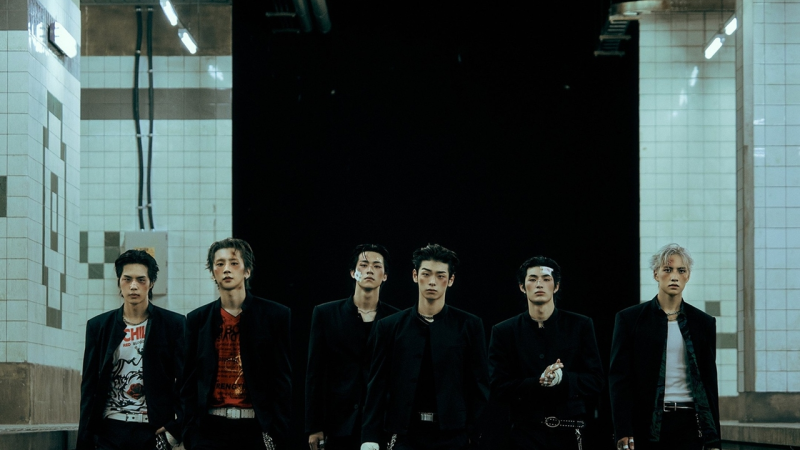
Ask ten K-pop fans where the third generation ends and the fourth begins, and you will get ten different answers — delivered with total confidence. Generations are the fandom’s favorite organizing tool: a shorthand for eras, sounds, business models, and shared memories. But unlike album releases, generations were never announced by anyone. They were named after the fact, by fans, journalists, and the industry itself, looking back and deciding that something had shifted.
Used well, the generation system is a genuinely useful map of how K-pop grew from a local television phenomenon into a global streaming industry in barely three decades. Used badly, it starts arguments that never end. This guide walks through each generation as it is most commonly described, the groups that define it, and the industry changes that make each era feel distinct — plus why the borders between them will always be fuzzy.
What Counts as a K-pop Generation?
A generation is not just a block of years. Fans and commentators usually point to a cluster of changes arriving together: a new wave of dominant groups debuting in a short window, a shift in how music is sold and consumed, a new style of choreography, fashion, or sound, and often a new way for international fans to discover and support idols.
That is why the dates in this article are ranges, not rules. Most timelines roughly agree on the shape — first generation in the 1990s, second in the 2000s, third in the 2010s, fourth around the turn of the 2020s, and a fifth now taking shape — but individual groups near a border get claimed by both sides. Think of generations less like chapters with page numbers and more like weather systems: you can feel when the climate has changed, even if no single day marks the turn.
First Generation: The Blueprint (Early 1990s – Early 2000s)
Modern K-pop is usually dated to a single television moment: Seo Taiji and Boys performing on a music show in 1992, blending rap, dance, and social commentary in a way Korean TV had never seen. It reset what a pop act could be, and the industry that formed around that shock built the template still used today — the trainee system, the idol group format, synchronized choreography, and fandom as an organized force.
The groups that defined the era are still spoken of with reverence. H.O.T., who debuted in 1996 under SM Entertainment, are widely credited as the first true idol group of the modern mold, with a fandom culture — coordinated colors, light sticks’ ancestors in balloons, fan chants — that set the pattern. Their rivals Sechs Kies brought the competition narrative. Among girl groups, S.E.S. and Fin.K.L established the two poles of the era’s image, ethereal and bright versus confident and glamorous, while g.o.d and Shinhwa proved idols could grow up with their audience. Shinhwa’s longevity became proof that a group could outlast its original contract era.
This was the physical sales era in its purest form: albums bought in record stores, popularity measured by TV appearances and album shipments, and a fanbase that was overwhelmingly domestic, with the first sparks of interest across Asia. When the first generation faded in the early 2000s, it left behind not just nostalgia but the entire operating system of K-pop.
Second Generation: The Hallyu Wave (Mid-2000s – Early 2010s)
If the first generation built the machine, the second generation exported it. Across the mid-2000s, a remarkable run of debuts — TVXQ, Super Junior, BIGBANG, Girls’ Generation, Wonder Girls, KARA, SHINee, and 2NE1 among them — carried K-pop across Asia and, eventually, beyond it. The Korean Wave, or Hallyu, became a genuine cultural export, and idol groups were its flagship.
Each defining act brought something new. BIGBANG blurred the line between idol and artist, with members writing and producing their own material. Girls’ Generation became the era’s defining girl group, a national symbol whose popularity cut across demographics. Wonder Girls took the audacious step of promoting in the United States, an early, difficult attempt at the American market. TVXQ and KARA built enormous Japanese careers, proving K-pop groups could top charts in a second language.
The technology shifted under their feet. YouTube arrived in the middle of this generation and quietly changed everything: for the first time, a fan in Jakarta, Lima, or Warsaw could watch the same music video on the same day as a fan in Seoul, free. Fandom internationalized years before the industry’s business models caught up. By the early 2010s, the stage was set — literally — for a worldwide audience the second generation had discovered but not yet fully claimed.
Third Generation: The Global Streaming Era (Early 2010s – Late 2010s)
The third generation is when K-pop stopped being a regional phenomenon with global pockets and became a global industry outright. EXO, BTS, BLACKPINK, TWICE, Red Velvet, SEVENTEEN, GOT7, and NCT headline most accounts of the era, and their careers trace the decade’s changes almost perfectly.
EXO’s rise showed the scale album sales could reach as the Chinese market and bulk-buying fan culture grew. TWICE became the defining girl group of the era in Korea and Japan, built on a run of era-defining hit singles. BLACKPINK demonstrated the power of the YouTube-first strategy, turning music videos into global events and carrying K-pop branding into Western luxury and festival spaces. And BTS became the generation’s defining story: a group from a then-small agency that built an intensely loyal international fandom through social media, personal storytelling, and relentless online engagement, then converted that fandom into stadium tours, Billboard chart-toppers, a speech at the United Nations, and a level of Western mainstream recognition no K-pop act had reached before.
Underneath the headlines, the business transformed. Streaming replaced downloads, social media followings became a measurable asset agencies planned around, and “going viral” abroad stopped being luck and became strategy. The third generation also professionalized the global fan: organized streaming parties, bulk album purchases, and fan translation teams working like volunteer newsrooms.
Fourth Generation: Born on Social Media (Late 2010s – Early 2020s)
The fourth generation debuted into a world where K-pop was already global — and it shows. Groups commonly placed here, including Stray Kids, TXT, ITZY, aespa, ENHYPEN, IVE, LE SSERAFIM, and NewJeans, never had to be “introduced” to international fans. They launched with global audiences watching in real time, English-language content from day one, and social platforms treated as a primary stage rather than a promotional extra.
The sound and strategy evolved accordingly. Self-production became a selling point, with Stray Kids the most prominent example of a group built around its own producing unit. Concepts went high-tech and lore-heavy; aespa debuted with virtual avatar counterparts and an entire fictional universe as part of the act. Then NewJeans arrived with an easy-listening, Y2K-inflected sound and minimal aesthetic that cut against the maximalism around them — and promptly reset the trend cycle, a reminder that every generation’s rebels become the next one’s template.
This is also the TikTok era. Dance challenges turned fifteen-second clips into a chart strategy, songs were built with shareable hooks, and a group’s reach could explode from a single viral moment. The pandemic accelerated everything: with touring paused, online concerts, video-call fan events, and constant short-form content became the industry’s connective tissue — habits that never really left.
Fifth Generation: The New Wave Takes Shape (2023 – Present)
Calling a fifth generation is itself part of the debate — but by around 2023, fans and Korean media increasingly used the label for a fresh cohort of rookies, including groups such as ZEROBASEONE, RIIZE, BOYNEXTDOOR, ILLIT, and TWS. What justifies the new number, in most tellings, is less a single sound than a shift in conditions: these groups debuted after K-pop’s globalization was complete, competing from day one in a market where every major release is a worldwide event.
Early signs of the era include survival-show and project groups arriving with pre-built international fandoms, a continued swing between easy-listening pop and high-concept performance styles, and debut marketing designed for short-form platforms. Whether the fifth generation is ultimately defined by these traits or by something nobody has noticed yet is an open question — a generation’s identity only becomes clear in hindsight.
Why the Boundaries Will Always Be Debated
Generation lines are drawn by people with loyalties. A fan who discovered K-pop through a borderline group has personal reasons to place that group in the era they grew up with. Agencies have occasionally had marketing reasons to claim a “new generation” label for their rookies. And the criteria themselves — debut year, sound, sales model, fandom style — rarely change on the same schedule. A group can debut in one era, sound like the previous one, and be sold like the next.
There is also a simple survivorship effect: history remembers the winners. The generations look clean in retrospect because the dozens of groups who debuted in the same years and faded are no longer part of the conversation. The map is drawn around the landmarks.
None of this makes the system useless — quite the opposite. Generations are how K-pop tells its own story: how a televised experiment in 1992 became trainee systems and balloon oceans, then YouTube revolutions, Billboard eras, and TikTok takeovers. Argue about the borders all you like. That argument, carried on by every new wave of fans, is itself one of the traditions each generation hands down to the next.